by bartmann | Apr 4, 2024
Despite their breakup almost 50 years ago, The Beatles remain unquestionably relevant to today’s musicians. While this stems in part from their role in pop culture, it was their transformative music that secured this lasting influence. In this course, we will study...

by bartmann | Apr 4, 2024
Constitutions serve as the basic blueprint for a government, as they provide the foundation and describe the structure for how a community will govern itself. The United States Constitution is often used as a model for creating a government, but it is only one of many...

by bartmann | Apr 4, 2024
From our species’ earliest moments, we have played. Mancala. Tabula. Chess. Noughts and Crosses. Monopoly. Bridge. Cops & Robbers. Halo. Minecraft. Cards Against Humanity. The list of contrivances that different peoples, communities, and cultures have devised to...
by bartmann | Apr 4, 2024
Clearly, Nobel laureates have made major creative contributions to world literature and to international reception of emerging nations’ literary arts. This course will expose students to movements in 20th-century world literature by reading Nobel laureates. Global...

by bartmann | Apr 4, 2024
Because insects account for more than half of all described species and have profound effects on our history and culture, knowledge of their contributions and influences is important. Ecologically, insects provide tremendous benefits and equally daunting challenges....
by bartmann | Apr 4, 2024
Rome survives despite nearly 3,000 years of invasions by Sabines, Gauls, Visigoths, Ostrogoths, Huns, Normans, Napoleon, Hitler, and mass tourism. In this course we will visit Rome, interwoven in texts and art, from antiquity through the twentieth century. We will...

by bartmann | Apr 4, 2024
This course explores the beliefs and cultures of Islam and the Muslim world. It covers the life and teachings of Muhammad, major themes of the Qur’an, and the primary differences between Sunni and Shi’i Muslims. It also introduces aspects of Muslim cultures in the...

by bartmann | Apr 4, 2024
This course tracks the downward spiral of the Roman Republic and the rise of the Roman Empire, starting from around 146 BC when Rome first firmly established herself as the world power and continuing through the Battle of Actium of 31 BC, where Octavian established...

by bartmann | Apr 4, 2024
With an eye to the esthetic qualities of the human body in motion, this course surveys diverse forms of dance in many cultures of the world in order to deepen our appreciation of the spiritual, emotional, and intellectual dimensions of this universal mode of...

by bartmann | Apr 4, 2024
Travels in Consciousness, taught by Norman Austin, Professor Emeritus of the Department of Classics, will explore the history of consciousness as reflected in a variety of texts. Readings will range widely, from Bronze Age Greece to American authors of the Twentieth...

by bartmann | Apr 4, 2024
Gene Kelly once said that “the history of dance on film begins with Astaire.” One might say that the history of dance on film ends with Kelly. Dancin’ Fools will explore the Broadway and Hollywood careers of these two iconic song and dance men who define the Golden...
by bartmann | Apr 4, 2024
What makes comedy comedy? Does the comedic aesthetic evolve across cultural and temporal barriers? How do interpretation and performance affect our understanding of the works? What does it mean that comedy is deadly serious? These are a few of the questions to be...

by bartmann | Apr 4, 2024
Franz Liszt (1811–1886) is one of the seminal figures of the 19th century. As one of the great piano virtuosos, he toured Europe from one end to the other, coming into contact with virtually all the prominent figures of the period. As a composer, he contributed to all...

by bartmann | Apr 4, 2024
Two years ago the Main Library of the University of Arizona was given a massive donation of original collections from the American Vaudeville Museum by its curators Frank Cullen and Donald McNeilly. This collection is one of the largest in the world. To commemorate...
by bartmann | Apr 4, 2024
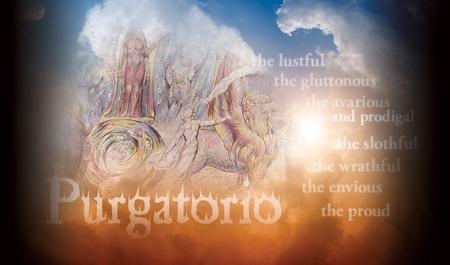
Using the recent translation by Jean and Robert Hollander, we will deal with Dante’s views on human nature as represented in his Purgatorio. We shall discuss the nature of sin: how it is that appetites which keep the body and species alive are evil (i.e., lust and...

by bartmann | Apr 4, 2024
When Oliver Wendell Holmes declared that “the life of the law has not been logic; it has been experience,” he meant that law is a messy and imperfect invention reflecting the human condition. This course will explore the imperfect nature of law today by focusing on...

by bartmann | Apr 4, 2024
Please Note: This course will be held in Oro Valley at the Western National Parks Association (12880 N Vistoso Village Dr). The relationship between humans and insects can be antagonistic. Only about 6% of people said that they enjoyed having insects in their yards....

by bartmann | Apr 4, 2024
Sorry! This course has sold out. Click here to join the course waitlist How did Buddhism change world civilization? This is a puzzling question for many people interested in philosophy, spirituality, and practice. As a major religious tradition, Buddhism deserves our...

by bartmann | Apr 4, 2024
Please Note: The class session originally scheduled for March 19th has been moved to March 12th (during the UA Spring Break) due to a conflict in the Professor’s schedule. The dates listed above are correct and there will be NO CLASS on March 19th. Come explore...
by bartmann | Apr 4, 2024
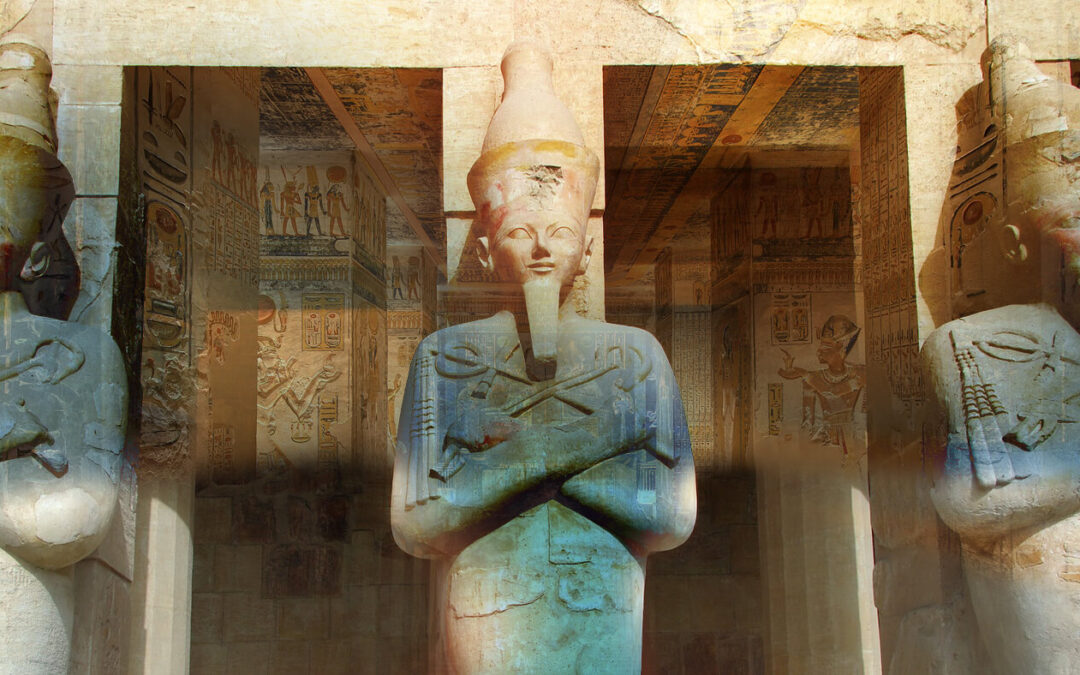
This course will survey the fundamentals of ancient Egyptian religion from the Predynastic period (ca. 4000 BC) to the end of the New Kingdom (ca. 1000 BC). Material will be covered both as an overview of how things unfolded over the various periods as well as how...